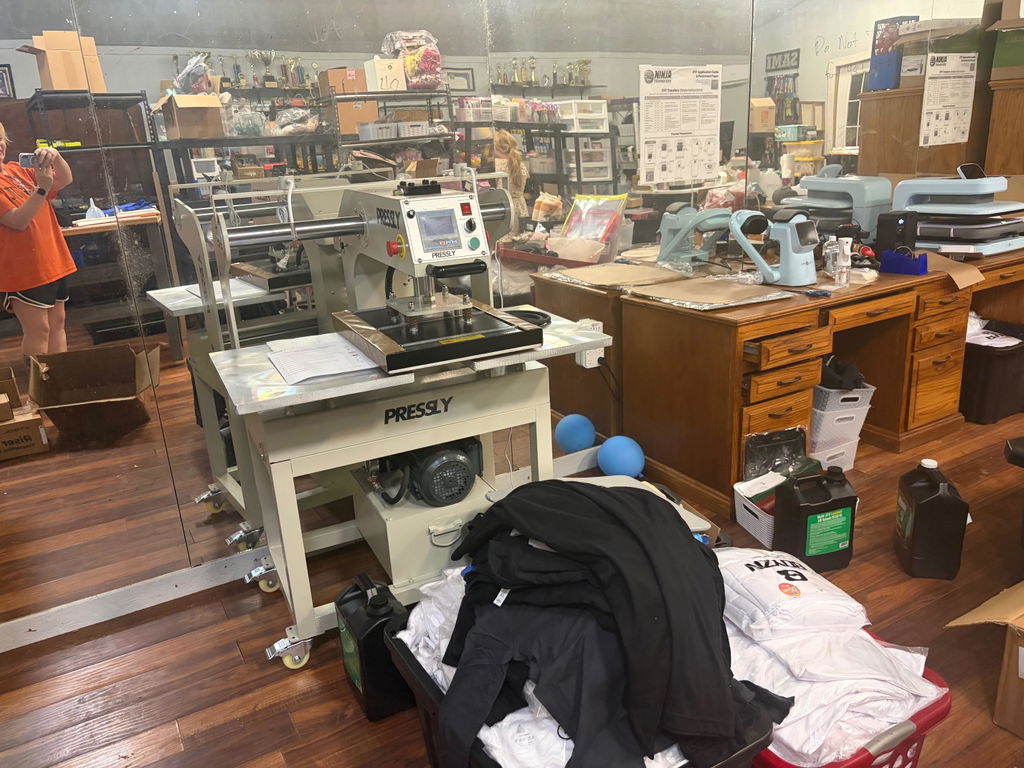
How to Choose the Right Heat Press Machine?
When selecting a machine, you must prioritize your intended use. If you only plan to print t-shirts, flat presses will suffice. However, for products like mugs, hats, and plates, combo (multi-functional) machines are more logical.
Plate size (the printing area) is another important criterion. Sizes like 38x38 cm or 40x60 cm are the most common. For large-scale projects, machines with wide plates save significant time.
Your production volume also influences your choice. Manual machines are ideal for hobbyists. Businesses engaged in mass production generally prefer pneumatic or automatic models.
Heat Presses for Screen Print Transfers
If screen print transfers are part of your production workflow, machine selection should go beyond maximum temperature. Platen size, repeatable pressure, heat consistency, garment loading, and expected production volume all affect how reliably a transfer process can be repeated. Explore our heat press machines for screen print transfers to compare commercial options designed for different production requirements.
Garment Printing Heat Presses
If your production centers on T-shirts, hoodies, sweatshirts, workwear, jerseys, tote bags, and other flat apparel, choose a press around the garments you decorate and the way your shop works. Platen area, loading access, transfer requirements, operator repeatability, and expected output all affect which machine format fits the production floor. Explore our garment printing heat press machines to compare hydraulic, slide-out, and higher-output configurations for apparel production.
Heat Presses for Vinyl and HTV
If heat transfer vinyl is part of your apparel workflow, choose a press around your typical design sizes, garment types, workspace, and production volume. Compact presses can suit smaller HTV applications, while full-size clamshell and hydraulic machines better support larger or more frequent garment production. Explore our heat press machines for vinyl and HTV to compare mini, portable, commercial, and hydraulic options for different production needs.
Dual Station Heat Press Machines
If your apparel operation needs a faster loading rhythm during repeated production runs, a dual-station layout can help separate garment preparation from the active pressing cycle. Production volume, operator workflow, platen requirements, and station utilization all affect whether this format makes sense. Explore our dual station heat press machines to compare HYDRO1620 configurations for commercial apparel production.
Heat Press Machines for DTF, Sublimation & Heat Transfer Printing
How to Choose the Right Heat Press Machine?
When selecting a machine, you must prioritize your intended use. If you only plan to print t-shirts, flat presses will suffice. However, for products like mugs, hats, and plates, combo (multi-functional) machines are more logical.
Plate size (the printing area) is another important criterion. Sizes like 38x38 cm or 40x60 cm are the most common. For large-scale projects, machines with wide plates save significant time.
Your production volume also influences your choice. Manual machines are ideal for hobbyists. Businesses engaged in mass production generally prefer pneumatic or automatic models.
Heat Presses for Screen Print Transfers
If screen print transfers are part of your production workflow, machine selection should go beyond maximum temperature. Platen size, repeatable pressure, heat consistency, garment loading, and expected production volume all affect how reliably a transfer process can be repeated. Explore our heat press machines for screen print transfers to compare commercial options designed for different production requirements.
Garment Printing Heat Presses
If your production centers on T-shirts, hoodies, sweatshirts, workwear, jerseys, tote bags, and other flat apparel, choose a press around the garments you decorate and the way your shop works. Platen area, loading access, transfer requirements, operator repeatability, and expected output all affect which machine format fits the production floor. Explore our garment printing heat press machines to compare hydraulic, slide-out, and higher-output configurations for apparel production.
Heat Presses for Vinyl and HTV
If heat transfer vinyl is part of your apparel workflow, choose a press around your typical design sizes, garment types, workspace, and production volume. Compact presses can suit smaller HTV applications, while full-size clamshell and hydraulic machines better support larger or more frequent garment production. Explore our heat press machines for vinyl and HTV to compare mini, portable, commercial, and hydraulic options for different production needs.
Dual Station Heat Press Machines
If your apparel operation needs a faster loading rhythm during repeated production runs, a dual-station layout can help separate garment preparation from the active pressing cycle. Production volume, operator workflow, platen requirements, and station utilization all affect whether this format makes sense. Explore our dual station heat press machines to compare HYDRO1620 configurations for commercial apparel production.

Original price
$3,499.99
Original price
$3,499.99
-
Original price
$3,499.99
Original price
$3,499.99
Current price
$3,149.99
$3,149.99
-
$3,149.99
Current price
$3,149.99
Heat Press Machine - HYDRO1620 - Hydraulic Head Moving
PRESSLY
In stock
Local Pickup & Shipping
Pressly Engineering HYDRO1620 16×20" Hydraulic Moving Head Heat Press Overview High volume garment decoration demands a true high product...
View full details
Original price
$3,499.99
Original price
$3,499.99
-
Original price
$3,499.99
Original price
$3,499.99
Current price
$3,149.99
$3,149.99
-
$3,149.99
Current price
$3,149.99
Save 10%

Original price
$1,110.00
-
Original price
$1,224.99
Original price
$1,110.00
-
Original price
$1,224.99
Original price
$1,110.00
$999.99
-
$1,099.99
$999.99
-
$1,099.99
Current price
$999.99
Clamshell Heat Press Machine Semi-Automatic Slide-Out – SlideMaster HP3804
PRESSLY
In stock
Local Pickup & Shipping
Clamshell Heat Press Machine Semi-Automatic Slide-Out – SlideMaster HP3804 In the Clamshell Heat Press world of textile printing, speed and safety ...
View full details
Original price
$1,110.00
-
Original price
$1,224.99
Original price
$1,110.00
-
Original price
$1,224.99
Original price
$1,110.00
$999.99
-
$1,099.99
$999.99
-
$1,099.99
Current price
$999.99
Save up to 10%

Original price
$1,999.99
Original price
$1,999.99
-
Original price
$1,999.99
Original price
$1,999.99
Current price
$1,499.99
$1,499.99
-
$1,499.99
Current price
$1,499.99
Cap & Hat Heat Press Machine Automatic Dual-Heat – CapMaster 2815
PRESSLY
In stock
Local Pickup & Shipping
Advanced Dual-Heat Technology Heat Press Machine The Cap & Heat Press Machine Automatic Dual-Heat – CapMaster 2815 represents the pinnacle of ...
View full details
Original price
$1,999.99
Original price
$1,999.99
-
Original price
$1,999.99
Original price
$1,999.99
Current price
$1,499.99
$1,499.99
-
$1,499.99
Current price
$1,499.99
Save 25%

Original price
$1,139.99
Original price
$1,139.99
-
Original price
$1,139.99
Original price
$1,139.99
Current price
$1,024.99
$1,024.99
-
$1,024.99
Current price
$1,024.99
Cap & Hat Heat Press Machine Semi-Automatic Dual-Heat – CapPro CP2815
PRESSLY
In stock
Local Pickup & Shipping
Cap & Hat Heat Press Machine The Cap & Hat Heat Press Machine Semi-Automatic Dual-Heat – CapPro CP2815 is a professional-grade solution for...
View full details
Original price
$1,139.99
Original price
$1,139.99
-
Original price
$1,139.99
Original price
$1,139.99
Current price
$1,024.99
$1,024.99
-
$1,024.99
Current price
$1,024.99
Save 10%

Original price
$155.54
Original price
$155.54
-
Original price
$155.54
Original price
$155.54
Current price
$139.99
$139.99
-
$139.99
Current price
$139.99
Portable Heat Press Machine EasyPress-Style – HP230
PRESSLY
In stock
Local Pickup & Shipping
Compact Design with Professional Power Portable Heat Press The Portable Heat Press Machine EasyPress-Style – HP230 is a versatile and user-friendl...
View full details
Original price
$155.54
Original price
$155.54
-
Original price
$155.54
Original price
$155.54
Current price
$139.99
$139.99
-
$139.99
Current price
$139.99
Save 10%

Original price
$44.49
Original price
$44.49
-
Original price
$44.49
Original price
$44.49
Current price
$39.99
$39.99
-
$39.99
Current price
$39.99
Mini Hand Heat Press Machine Portable Small Heat Press – HP101
PRESSLY
In stock
Local Pickup & Shipping
Portable and Lightweight Design Mini Heat Press The Mini Hand Heat Press Machine Portable Small Heat Press – HP101 is the perfect solution for sma...
View full details
Original price
$44.49
Original price
$44.49
-
Original price
$44.49
Original price
$44.49
Current price
$39.99
$39.99
-
$39.99
Current price
$39.99
Save 10%

Original price
$199.99
Original price
$199.99
-
Original price
$199.99
Original price
$199.99
Current price
$179.99
$179.99
-
$179.99
Current price
$179.99
Mug Heat Press Machine Sublimation for 11–15oz Mugs – MP170
PRESSLY
In stock
Local Pickup & Shipping
Mug Heat Press Machine Sublimation for 11–15oz Mugs – MP170 The MP170 Mug Press is a high-quality sublimation heat press designed for 11-15oz mugs....
View full details
Original price
$199.99
Original price
$199.99
-
Original price
$199.99
Original price
$199.99
Current price
$179.99
$179.99
-
$179.99
Current price
$179.99
Save 10%

Original price
$199.99
Original price
$199.99
-
Original price
$199.99
Original price
$199.99
Current price
$179.99
$179.99
-
$179.99
Current price
$179.99
Mug Heat Press Machine Sublimation for 11–15oz Mugs – MP180
PRESSLY
In stock
Local Pickup & Shipping
Precision Engineering for 11–15oz Mugs - MP180 Mug Press The Mug Heat Press Machine Sublimation for 11–15oz Mugs – MP180 is an essential tool for ...
View full details
Original price
$199.99
Original price
$199.99
-
Original price
$199.99
Original price
$199.99
Current price
$179.99
$179.99
-
$179.99
Current price
$179.99
Save 10%

Original price
$3,499.99
Original price
$3,499.99
-
Original price
$3,499.99
Original price
$3,499.99
Current price
$3,149.99
$3,149.99
-
$3,149.99
Current price
$3,149.99
DTF Heat Press Machine - HYDRO1620 - Heat Press for sublimation
PRESSLY
In stock
Local Pickup & Shipping
Industrial Power for Perfection Heat Press Machine The world of high-volume garment decoration requires equipment that combines raw power with deli...
View full details
Original price
$3,499.99
Original price
$3,499.99
-
Original price
$3,499.99
Original price
$3,499.99
Current price
$3,149.99
$3,149.99
-
$3,149.99
Current price
$3,149.99
Save 10%

Original price
$6,299.00
Original price
$6,299.00
-
Original price
$6,299.00
Original price
$6,299.00
Current price
$5,984.00
$5,984.00
-
$5,984.00
Current price
$5,984.00
Double Heat Press, Double Production 2x Hydro1620
PRESSLY
In stock
Local Pickup & Shipping
Endustrial Power for Perfection Heat Press Machine The world of high-volume garment decoration requires equipment that combines raw power with deli...
View full details
Original price
$6,299.00
Original price
$6,299.00
-
Original price
$6,299.00
Original price
$6,299.00
Current price
$5,984.00
$5,984.00
-
$5,984.00
Current price
$5,984.00
Save 5%

Original price
$4,174.98
Original price
$4,174.98
-
Original price
$4,174.98
Original price
$4,174.98
Current price
$3,996.00
$3,996.00
-
$3,996.00
Current price
$3,996.00
Heat Press Duo HYDRO1620 & Cap and Hat Heat Press Machine
PRESSLY
In stock
Local Pickup & Shipping
Two Presses. Zero Limits. HYDRO1620 + CapPro CP2815 Stop choosing between garments and headwear. This bundle pairs the industrial-grade HYDRO1620 h...
View full details
Original price
$4,174.98
Original price
$4,174.98
-
Original price
$4,174.98
Original price
$4,174.98
Current price
$3,996.00
$3,996.00
-
$3,996.00
Current price
$3,996.00
Save 4%

Original price
$2,124.00
Original price
$2,124.00
-
Original price
$2,124.00
Original price
$2,124.00
$1,921.85
-
$2,016.85
$1,921.85
-
$2,016.85
Current price
$1,921.85
Smart Dealer Kit, Cap and Hat & Clamshell Heat Press
PRESSLY
In stock
Local Pickup & Shipping
SlideMaster HP3804 Your Flat Garment Workhorse Built for high-volume flat garment production. The electromagnetic auto-open system lifts the lid t...
View full details
Original price
$2,124.00
Original price
$2,124.00
-
Original price
$2,124.00
Original price
$2,124.00
$1,921.85
-
$2,016.85
$1,921.85
-
$2,016.85
Current price
$1,921.85
Save up to 10%

Original price
$1,164.87
Original price
$1,164.87
-
Original price
$1,164.87
Original price
$1,164.87
Current price
$1,105.00
$1,105.00
-
$1,105.00
Current price
$1,105.00
Press More Hats, Get 2 Bonus Pads
PRESSLY
Out of stock
Local Pickup & Shipping
CapPro CP2815 + Curve Fit & Sharp Fit Hat Press Pad Bundle The CapPro CP2815 is built for professional cap customization, and this bundle make...
View full details
Original price
$1,164.87
Original price
$1,164.87
-
Original price
$1,164.87
Original price
$1,164.87
Current price
$1,105.00
$1,105.00
-
$1,105.00
Current price
$1,105.00
Sold out
Let customers speak for us
IMPRESSIVE
I’m a complete beginner, and I’m honestly impressed with how easy this is to use! The setup was simple, everything is straightforward, and I was able to get started right away. If you’re new to this like I am, don’t be intimidated. I highly recommend it!
Cindi Phillips

I love it!!!!
April
Great product
This is my first time using dtf bank ink, and everything seems good quality.
It is reasonably priced.
I hope to continue buying this product in the future.
CustomerRENE RODRIGUEZ

great product that really works
Timothy

Should have got this sooner. So amazing. I love it
Dominique
Love the new press ❤️
The press is amazing and unbelievable Customer service ⭐️⭐️⭐️⭐️⭐️
Sharri Oaks
Ink
I look forward to trying your ink
Scott Daily

Just as described !!!!
This machine has been a game changer for us.
Guadalupe
Game changer
What game changer this has already been for our business. So much better than what he had before. Only regret is not buying one sooner
Scott Paavo
Great products and Delivery. 👍🏾
Cleo Harris Jr

Great products and Delivery. 👍🏾
Cleo Harris Jr
Great products and Delivery. 👍🏾
Cleo Harris Jr

Great products and Delivery. 👍🏾
Cleo Harris Jr

Great products and Delivery. 👍🏾
Cleo Harris Jr

Great products and Delivery. 👍🏾
Cleo Harris Jr