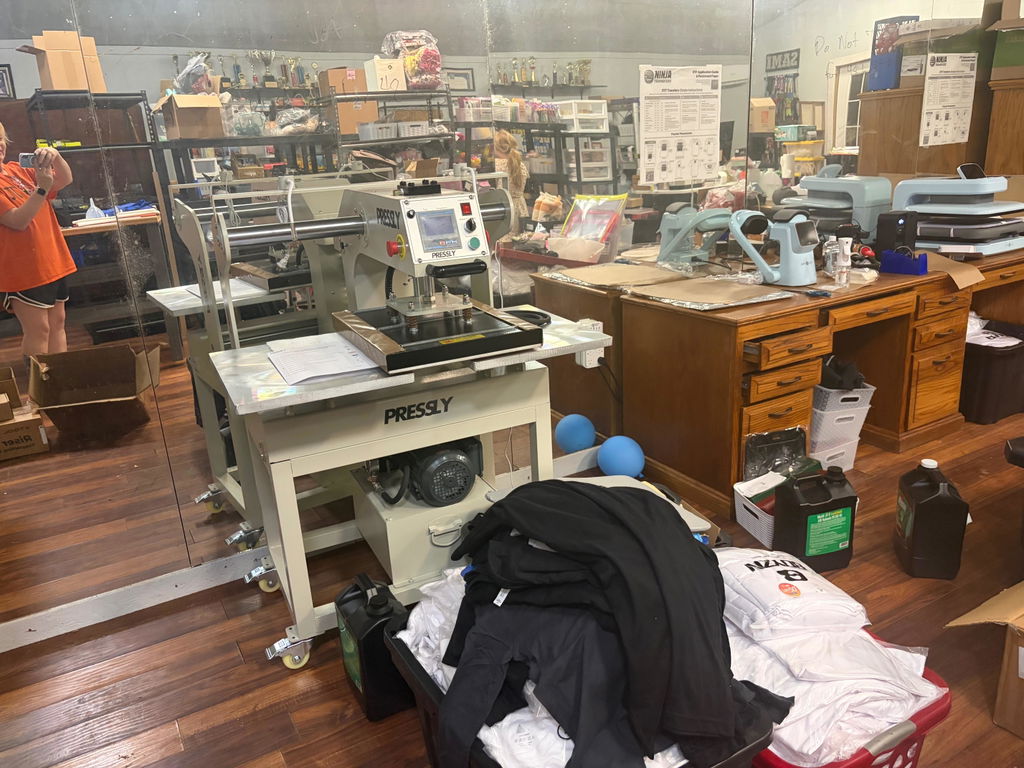
Buying a commercial heat press is only one part of setting up an efficient garment production station. The machine also needs a suitable supporting surface, enough space for its moving components, appropriate electrical service, and a layout that allows operators to handle garments without interfering with the pressing area.
These details become increasingly important when a heat press is used throughout the working day. A workstation that seems adequate for occasional applications may create unnecessary reaching, awkward material handling, or restricted access when production becomes repetitive.
This guide focuses on the physical environment around the machine. It explains how to evaluate a heat press table, stand, installation space, and surrounding work area before putting equipment into service.
What Does a Commercial Heat Press Need?
A commercial heat press needs a support structure suitable for the machine's documented weight and operating loads, the required movement clearances, an appropriate electrical connection, and a safe route for loading and unloading garments. The exact requirements depend on the press model, so the manufacturer's installation instructions take priority over generic workstation dimensions.
Start With the Machine's Operating Footprint
The dimensions of a closed machine do not necessarily describe the space it occupies during operation. A hinged head opens into a larger envelope. A swing-away design needs room for lateral movement. A slide-out platen requires clearance in the direction of travel.
Moving-head systems introduce another consideration: the heated assembly may travel between separate lower working positions. The surrounding workstation must accommodate that complete path rather than only the machine's resting position.
Begin by reviewing the manufacturer's dimension drawing, installation manual, and required service clearances. Where the available documentation is incomplete, obtain the missing information before ordering a table or arranging nearby equipment.
The distinction is especially important in compact production rooms. A machine may fit between two walls when closed but still be impossible to operate as intended.
Measure the Full Movement Envelope
Identify the machine's widest and deepest operating positions. Include handles, drawers, moving heads, and any accessories that remain attached during normal operation.
Do not assume that all models using the same platen size require the same amount of surrounding space. A 16-by-20-inch working area identifies the approximate platen format, not the dimensions of the complete machine or workstation.
For production buyers comparing layouts, the high production heat press guide provides the broader equipment context. Installation planning should begin only after the intended machine configuration is clear.
Choose a Suitable Heat Press Table
A heat press table must support the complete equipment assembly under its intended operating conditions. A tabletop that feels solid when empty has not necessarily been evaluated for the weight, movement, and loads associated with a powered press.
Obtain the equipment's installed weight, support requirements, and any specified mounting instructions. Then compare those requirements with the table or stand manufacturer's documented load capacity and intended use.
A general-purpose office desk should not automatically be treated as an industrial equipment stand. Similarly, a heavy-looking workbench should not be assumed suitable without checking its specifications.
Check More Than Static Weight
Equipment may create forces or movement during normal operation that are not represented by its resting weight alone. The supporting structure must be appropriate for the way the particular machine operates.
Look for documented load limits, a stable frame, a suitable working surface, and any manufacturer-required anchoring or mounting arrangement. Do not improvise structural modifications to compensate for a stand that is not intended to support the equipment.
Account for Table Height
Working height affects how operators place garments, inspect positioning, and remove finished items. A surface that places the lower platen too high may make garment placement awkward. An excessively low surface can encourage repeated bending.
There is no single universal table height that fits every heat press and operator. The relevant measurement is the final working height after the machine is installed, not the height of the empty table.
Evaluate that height with the actual loading arrangement. A slide-out platen, for example, may place the garment in a different position during preparation than a fixed lower platen.
Heat Press Stand or Workbench?
A dedicated stand and a suitable industrial workbench can both be considered, provided the manufacturer approves the installation and the supporting structure meets the required specifications.
| Consideration | Dedicated Stand | Industrial Workbench |
|---|---|---|
| Equipment compatibility | Check the exact models the stand is designed to support. | Verify capacity and dimensions against the machine documentation. |
| Working height | May be fixed for a particular equipment configuration. | May provide different height options, subject to safe installation. |
| Mounting | Follow the manufacturer's specified hardware and procedure. | Confirm whether the bench can accommodate required mounting. |
| Surrounding workspace | May offer a compact equipment-specific footprint. | May provide additional surface area if it does not obstruct movement. |
The best choice is not necessarily the option with the most tabletop space. It is the option that properly supports the machine while allowing its controls, movement, and garment-loading process to remain accessible.
Keep Electrical Installation Separate
A heat press is electrical equipment, and its power requirements should be established before the workstation is installed. Do not decide where the press will sit solely because a convenient outlet is nearby.
Check the machine's documented voltage, current or power rating, connection requirements, and any instructions for dedicated circuits or protective devices. Have a qualified electrician evaluate whether the proposed location has suitable electrical service.
OSHA's electrical equipment requirements address appropriate installation and use of listed or labeled equipment in accordance with its instructions.
Do not assume an extension cord, household power strip, or outlet adapter is suitable for commercial pressing equipment. Such accessories are not substitutes for verifying the equipment's electrical requirements.
Plan cable routing so power connections do not interfere with machine travel or create a walkway hazard. Keep cords away from hot surfaces and areas where moving equipment could damage them.
Separate Pressing From Garment Preparation
A workstation becomes easier to organize when the heat press is treated as one part of the garment-handling process rather than the entire process.
Incoming garments need a place to be organized. Transfer artwork must remain identifiable. After pressing, the finished item may require handling steps specified by the transfer manufacturer.
These activities should not compete for the same physical space needed by the machine's moving components.
Consider three distinct working zones:
- Preparation: Keep garments and the appropriate job instructions accessible before application.
- Pressing: Preserve the machine's required operating envelope and safe access to controls.
- Exit: Provide a suitable location for completed garments without obstructing the next load.
This arrangement is a workspace concept, not a promise that every shop needs three separate tables. In a small room, the zones may be adjacent surfaces or clearly designated areas.
What matters is that preparation materials do not accumulate against the heated assembly, and that completed garments can move away without requiring operators to cross an active pressing area.
Plan Around the Actual Loading Method
Not every heat press is loaded from the same direction. On some machines, the operator works directly at the front of a fixed platen. On others, a drawer moves forward or the head travels between work positions.
For example, DTF Bank's SlideMaster HP3804 uses a slide-out lower platen. A workstation for this configuration needs to accommodate the lower platen's travel and the operator's access during garment placement.
A different installation consideration applies to the HYDRO1620 hydraulic head-moving press, which has separate lower working areas associated with its moving-head layout.
These are not interchangeable installation diagrams. Follow the model-specific documentation rather than copying the footprint of a press with a similar platen size.
Before purchasing furniture, walk through the intended loading sequence with the actual equipment dimensions. Identify where the operator will stand, where a garment will enter, and where it will leave.
Protect Access to Safety Controls
Controls and safeguards must remain accessible and functional after installation. Storage bins, racks, or surrounding work surfaces should not interfere with them.
OSHA's general machinery guarding rule addresses protection from hazards associated with the point of operation and moving components. Applicable requirements depend on the equipment and workplace, so installation should be reviewed using the relevant instructions and safety obligations.
Do not bypass a guard, alter an operating control, or restrict emergency access to gain additional workspace.
Likewise, do not use machine surfaces, electrical housings, or other components as temporary shelves unless the manufacturer explicitly identifies them for that purpose.
Simple environmental decisions can help keep access clear: place storage outside the movement path, avoid clutter near controls, and provide sufficient lighting for safe garment positioning.
Consider Maintenance Access Before Installation
A heat press workstation must support more than daily production. Equipment may need inspection, cleaning, adjustment, and authorized service over its operating life.
Review the service-access requirements before positioning the machine tightly against a wall or installing permanent furniture around it.
Do not assume that a technician can safely move or service a large machine without the clearance described in its documentation. Equipment-specific procedures may require access to panels, connectors, or other areas that operators do not normally use.
Keep the manufacturer's installation and service information available. Record the machine model and identifying information so support personnel can determine which instructions and replacement components apply.
Maintenance access is not the same as permission for untrained staff to open electrical or mechanical assemblies. Work beyond routine operator tasks should be handled by qualified personnel following the appropriate procedures.
Test the Workstation Before Full Production
After installation, evaluate the complete workstation under approved operating conditions before relying on it for a full production schedule.
Begin with a visual review of the supporting structure, equipment positioning, electrical arrangement, and unobstructed movement. Confirm that the machine is installed according to the manufacturer's instructions.
Next, observe a normal garment-loading sequence using the materials and process intended for the station.
The goal is to find workspace problems: insufficient clearance, inaccessible storage, awkward transfer positioning, or an unloading area that interferes with the next job.
Do not use this evaluation to invent new pressing settings or bypass required safeguards. Application conditions remain subject to the transfer manufacturer's instructions.
Document the Approved Layout
A simple photograph or floor plan can help preserve the intended arrangement. Mark the required clearances, support equipment, and storage locations.
If furniture is later moved or the press is replaced, review the installation again. A workstation approved for one model is not automatically appropriate for a different machine.
Build the Workspace Around the Machine
A productive commercial heat press station begins with a suitable machine, but it also requires the physical environment to support that machine's documented operation.
Start with the equipment specifications, confirm the supporting structure and electrical installation, preserve clearances, and organize garments around the real loading sequence.
When selecting equipment for repeated apparel production, explore DTF Bank's high production heat press equipment guide before finalizing the workstation design.
Frequently Asked Questions
Do I need a special heat press table?
You need a support structure suitable for the exact press and its operating requirements. A dedicated stand may be appropriate, but a properly specified industrial workbench may also be considered if approved for the installation.
Can a commercial heat press sit on a desk?
Do not assume a general-purpose desk is suitable. Verify the machine's documented weight, operating loads, required support, and mounting instructions against the furniture manufacturer's specifications.
How much clearance does a heat press need?
Clearance varies by model and movement type. Check the complete operating envelope, installation requirements, access to controls, and service clearances rather than relying on platen dimensions alone.
Does a heat press need a dedicated outlet?
Follow the machine's electrical installation requirements. A qualified electrician should confirm whether the available circuit and connection are suitable for the particular equipment.
Should the press and garment table be separate?
Not necessarily. The priority is to keep preparation and finished garments clear of moving and heated equipment while preserving an efficient loading and unloading arrangement.