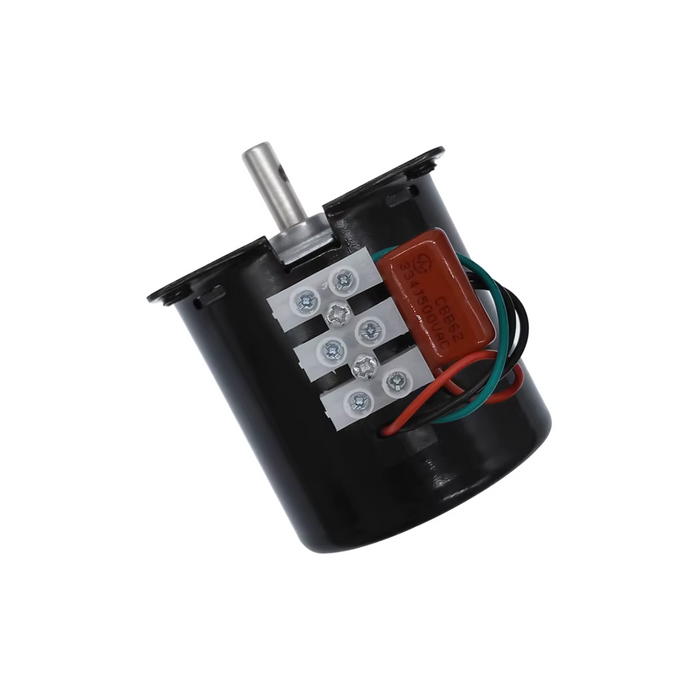

Film Roll Collector Motor
Description
Film Roll Collector Motor: Automating Your DTF Workflow
The Film Roll Collector Motor is a fundamental component for any high-volume digital printing setup. Its primary job is to take the finished, cured film and wind it neatly onto a roll. Without this automation, managing long runs of printed material becomes chaotic and labor-intensive.
In the world of DTF (Direct to Film) printing, consistency is the key to profit. This motor ensures that the film is pulled through the dryer at a steady pace. It prevents the film from bunching up or touching the floor, which protects your prints from dust and damage.
To maintain consistent performance and precise airflow management in your heat press, the installation of high-quality pneumatic components is essential. The
The Role of the Collector Motor in Production
The collector motor acts as the final stage of the automated printing line. As the film exits the curing oven, the motor rotates the take-up reel to collect the material. This keeps the entire workspace organized and ready for the next stage of production.
A reliable motor provides synchronized movement with the printer and the shaker unit. If the motor is too fast, it can stretch the film; if it is too slow, the film will sag. High-quality motors are designed to handle this delicate balance with precision.
By automating the collection process, you reduce the need for constant manual supervision. This allows operators to focus on preparing new designs or managing multiple machines. It is an essential investment for scaling any printing business.
Key Technical Features of Take-Up Motors
These motors are typically designed with high torque and low-speed capabilities. This combination is necessary to pull the weight of a full roll of film without straining. They are built for continuous operation in industrial environments.
Most collector motors feature an adjustable tension system. This allows the user to fine-tune how tightly the film is wound onto the core. Proper tension prevents the layers of film from sliding or becoming misaligned during storage.
The dual-voltage compatibility (110V/220V) makes these motors versatile for global use. They often come with a simple plug-and-play interface for easy integration. Durability is a priority, as these components must withstand thousands of hours of rotation.
Why Synchronization is Essential for Print Quality
If the collector motor does not stay in sync with the printer, the results can be disastrous. Uneven pulling can cause the ink to smudge before it is fully set. It can also lead to registration issues if the film is pulled too hard through the print head area.
Many modern systems use infrared sensors to trigger the motor. When the sensor detects a "loop" of film, the motor activates to take up the slack. This "loop-sensing" technology ensures that the film is never under too much direct tension.
Consistent winding also ensures that the film remains perfectly flat. Flat film is much easier to handle when it comes time to cut the transfers or move them to a heat press. A well-wound roll is a sign of a professional and efficient production process.
Benefits of Upgrading Your Collection System
Upgrading to a heavy-duty motor can significantly reduce mechanical failures. Older or weaker motors often struggle as the roll gets heavier, leading to jerky movements. A new, powerful motor ensures a smooth and steady rotation from the beginning to the end of the roll.
Automated collection also minimizes human contact with the printed film. Every time a person handles the film, there is a risk of fingerprints or accidental scratches. The motor eliminates this risk by keeping the film on a controlled path.
Furthermore, a tidy roll is easier to store and ship. Neatly wound rolls take up less space and are less likely to be crushed or damaged during transit. Efficiency in collection leads to efficiency in the entire supply chain.
Common Signs of Collector Motor Wear and Failure
Recognizing when your motor is reaching the end of its life can save you from downtime. One common sign is a grinding or humming noise coming from the gear housing. This usually indicates that the internal gears are worn or need lubrication.
If the motor starts to hesitate or move intermittently, the electrical brushes may be failing. You might also notice the motor getting excessively hot during long production runs. Heat is a major enemy of electrical components and can lead to a complete burnout.
Another sign of trouble is inconsistent winding tension. If the roll is tight at the start but loose at the end, the motor may be losing its torque capacity. Replacing the motor before it fails completely prevents ruined rolls of expensive film.
Installation and Maintenance Best Practices
Installing a replacement collector motor is generally a straightforward task. It usually involves mounting the motor to the side frame and connecting the drive belt or gear. Always ensure the power is off before starting any mechanical work on your machine.
Regular maintenance involves keeping the motor and its surrounding area clean. Dust from the printing environment can settle into the motor vents and cause overheating. A quick blast of compressed air every week can significantly extend the motor’s life.
Check the alignment of the take-up reel regularly. If the reel is not perfectly parallel to the dryer, the film will wind to one side. This puts uneven stress on the motor and can cause the bearings to wear out prematurely.
Choosing the Right Collector Motor for Your Setup
When selecting a replacement, always check the shaft diameter and the mounting hole pattern. You must also ensure the motor’s RPM (rotations per minute) matches your printer's output speed. A motor that is too fast or too slow will cause constant tension issues.
Consider the weight of the rolls you typically produce. If you often run 100-meter rolls, you will need a motor with higher torque than someone running shorter lengths. Choosing a slightly more powerful motor than you need provides a safety margin for heavy-duty use.
Investing in a high-quality motor from a reputable supplier ensures long-term reliability. While generic motors may be cheaper, they often lack the precision needed for delicate film handling. Quality hardware is the foundation of a successful DTF business.
Final Thoughts Collector Motor
The Film Roll Collector Motor is the final guardian of your print quality. It ensures that the hours of work put into design and printing are preserved in a neat, professional roll. Without this small but powerful device, industrial-scale printing would be impossible.
By prioritizing high-quality collection hardware, you protect your investment and your time. A smooth-running motor means fewer errors, less waste, and a more profitable workflow. Keep your production moving forward with a motor built for the demands of the modern print shop.
You are invited to join the DTF Bank world to stay updated on the latest printing techniques and find inspiration for your creative projects. Follow us on
Specifications
Warranty
Spare parts do not carry a warranty, and no warranty coverage is provided after installation or use.
All spare parts are non-returnable and non-refundable. It is the customer's responsibility to verify and ensure the compatibility of any spare part with their equipment before placing an order. Spare parts offered by DTF Bank are specifically designed for and intended to be used with our equipment, and compatibility with third-party or modified machines cannot be guaranteed. Please review our Return & Refund Policy for complete details and additional information.
If a spare part arrives damaged or defective, do not open, install, or use the item. Please take clear photos of the outer packaging and, if the box shows signs of damage, record a video of the unboxing. Submit these materials through the Order Support Request Form on our website within 5 business days of receiving the item.
Please note that any spare part that has been opened, used, or installed is not eligible for return or replacement under any circumstances, even if it would otherwise qualify as damaged or defective.
Shipping
At DTF Bank, we use trusted carriers to ensure your spare parts are delivered safely and promptly, offering shipping methods such as ground or air.
Orders for spare parts placed before 2 PM Central Time (CT) are shipped the same business day to get your products to you as quickly as possible. Orders received after this time will be shipped the next business day.
Shipping costs will be calculated at checkout based on the location provided, the shipping option selected, and the total weight of the purchase.
Currently, DTF Bank does not offer international shipping and ships exclusively within the United States to focus on delivering the best possible service to our domestic customers.
DTF Bank is not responsible for any delays that occur after the package is handed over to the shipping company.
While we strive to meet all delivery times, there may be occasions due to unforeseen circumstances where deliveries could be delayed. We appreciate your understanding and patience in these instances.
For more details, check out our Shipping Policy.