
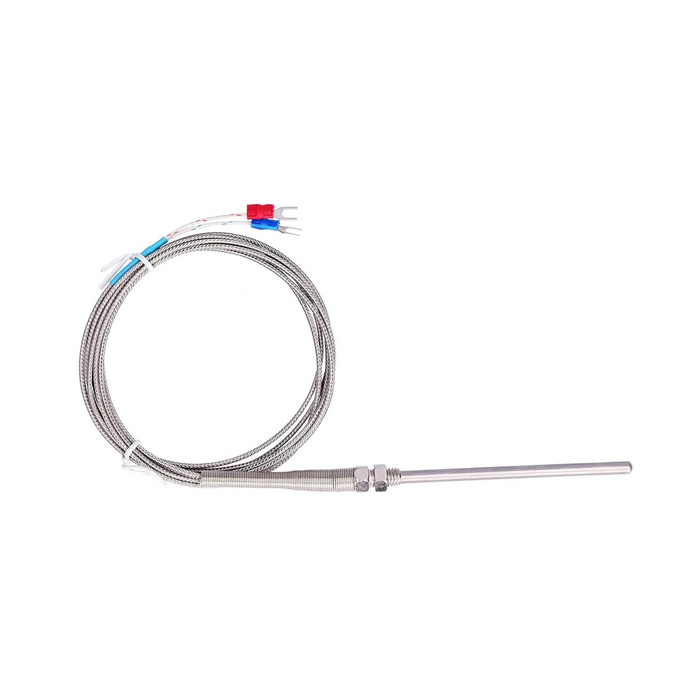

Thermocouple Temperature Sensor Probe Type 187
Description
Thermocouple Temperature Sensor Probe Type 187: Industrial Precision
The Thermocouple Temperature Sensor Probe Type 187 is a vital instrument for monitoring high-heat environments. In the competitive field of textile printing, heat consistency defines the success of your final product. This specific probe provides the accurate thermal feedback required to keep your production line running within safe parameters.
Reliable temperature data is the foundation of any automated curing process. Without a high-response sensor like the Type 187, managing a commercial dryer becomes a guessing game. This probe acts as the eyes of your control system, ensuring every design is treated with the exact amount of heat needed for a perfect bond.
Maintaining a consistent ink flow is vital for high-quality printing, and the right fittings make all the difference. Using a professional
Technical Superiority of the Temperature Sensor Type 187
The Type 187 model is engineered for rapid heat detection and long-term stability. It utilizes high-grade metal alloys that react instantly to even the slightest thermal shifts. This quick reaction time allows your heating elements to adjust before the material passing through the dryer is compromised.
The physical build of the Type 187 is designed for industrial resilience. It features a reinforced stainless steel tip that resists oxidation even under constant high-temperature exposure. This robust construction ensures that the internal sensing wires remain protected from the harsh atmosphere of a busy print shop.
Signal clarity is a major advantage of this specific probe series. It is manufactured with high-quality shielding to minimize electrical interference from nearby motors or power cables. This leads to steady temperature readings on your digital display, preventing the erratic behavior often seen with lower-quality sensors.
Why Precise Sensing is Vital for Quality Temperature Sensor
Heat control is the most critical variable in the curing of textile inks and adhesives. If the internal temperature fluctuates, the chemical bond between the ink and the garment can fail. The Type 187 probe ensures that your oven maintains a uniform heat zone from start to finish.
Consistent sensing prevents the common problem of "surface curing." This occurs when the outside of the adhesive melts but the core remains dry. By providing precise data to the controller, the Type 187 ensures deep, uniform heat penetration for maximum durability.
Accurate temperature monitoring also protects your expensive PET films from warping. High-intensity dryers can easily damage thin films if the heat is not regulated properly. Using a reliable sensor is the best way to safeguard your raw materials and reduce the cost of wasted prints.
Installation and Maintenance Best Practices Temperature Sensor
Installing the Thermocouple Temperature Sensor Probe Type 187 is a straightforward process for most technicians. The probe is usually mounted through a pre-drilled port in the dryer's heat chamber. It is important to position the tip so it measures the air temperature closest to the film's path.
When routing the lead wires, always avoid contact with moving belts or sharp metal edges. Secure the wires with high-temperature ties to prevent them from sagging into the heat zone. A clean and secure installation prevents physical stress on the wires, which is a leading cause of sensor failure.
Regular maintenance involves a simple visual inspection of the probe tip. Over time, carbon deposits or adhesive residue can build up on the sensor. Gently cleaning the tip with a soft cloth ensures that heat can reach the sensing element without any insulation delay.
Recognizing the Signs of a Faulty Temperature Sensor
A failing temperature sensor can cause catastrophic production delays if not identified early. One primary indicator is a "lazy" response, where the temperature on the display takes too long to change. This usually means the internal sensing junction is degrading and can no longer provide real-time data.
Another sign to watch for is inconsistent heating cycles. If your dryer seems to get much hotter or colder than the set point, the probe may be sending inaccurate signals. This "drift" can be dangerous, as it might lead to overheating without triggering an automatic safety shut-off.
If you see an error code on your PID controller, it is often a sign of a broken circuit within the probe. Because thermocouples operate by generating a small voltage, even a hairline fracture in the wire will stop the signal. Replacing the Type 187 immediately will restore your system's safety and accuracy.
Economic Benefits of High-Grade Sensing
While the Type 187 is a specialized component, its impact on your bottom line is significant. Accurate sensing leads to shorter warm-up times and more efficient energy usage. When your heaters operate only when necessary, you save money on every hour of production.
Reliability in sensing also means a lower rate of customer returns. Transfers that are cured at the wrong temperature often peel after the first wash. By ensuring a perfect cure every time, you build a reputation for quality that helps grow your business.
Furthermore, a high-quality sensor like the Type 187 has a much longer service life than generic alternatives. You spend less time on repairs and more time on production. In a high-volume shop, the uptime provided by reliable hardware is invaluable.
Advanced Features for Modern Workflows
The Type 187 is compatible with a wide range of industrial digital controllers and PLC systems. Its standard output makes it a versatile choice for both new machinery and older equipment upgrades. This flexibility is essential for shops running a diverse fleet of printers and dryers.
Thermal lag is virtually eliminated with the 187's thin-wall probe design. This feature is particularly useful for "stop-and-go" production styles where the dryer must react quickly to changes in load. The faster the sensor, the more stable your thermal environment will be.
Safety is the final, most important feature of this sensor. It acts as the primary defense against thermal runaway. In the event of a control failure, the Type 187 provides the critical data needed for secondary safety systems to intervene and prevent equipment damage.
Choosing the Correct Sensor for Your Machine
When ordering a replacement, always verify the probe length and the thread size of your current mount. The Type 187 comes in various configurations to fit different chamber depths. Ensuring a perfect fit prevents air leaks and ensures the probe sits in the optimal sensing position.
Check the lead wire length to make sure it can reach your control panel without being under tension. If your dryer operates at extreme temperatures, specify the type of insulation needed for the wires. Proper matching ensures that the sensor performs as intended for years to come.
Keeping a spare Type 187 in your maintenance kit is a smart move for any professional shop. Sensors are wearable items, and having a backup prevents an unexpected failure from halting your entire operation. Quality sensing is the key to a stress-free production day.
Final Thoughts Temperature Sensor
The Thermocouple Temperature Sensor Probe Type 187 is more than just a wire; it is a precision tool. It manages the most dangerous and critical variable in your printing process: heat. Without its constant monitoring, professional-grade results would be impossible to maintain.
By prioritizing high-quality sensors, you are investing in the longevity of your equipment and the satisfaction of your customers. A well-regulated dryer is a productive dryer. Keep your heat in check and your quality high with the reliability of the Type 187.
You are invited to join the DTF Bank world to stay updated on the latest printing techniques and find inspiration for your creative projects. Follow us on
Specifications
Shipping
At DTF Bank, we use trusted carriers to ensure your spare parts are delivered safely and promptly, offering shipping methods such as ground or air.
Orders for spare parts placed before 2 PM Central Time (CT) are shipped the same business day to get your products to you as quickly as possible. Orders received after this time will be shipped the next business day.
Shipping costs will be calculated at checkout based on the location provided, the shipping option selected, and the total weight of the purchase.
Currently, DTF Bank does not offer international shipping and ships exclusively within the United States to focus on delivering the best possible service to our domestic customers.
DTF Bank is not responsible for any delays that occur after the package is handed over to the shipping company.
While we strive to meet all delivery times, there may be occasions due to unforeseen circumstances where deliveries could be delayed. We appreciate your understanding and patience in these instances.
For more details, check out our Shipping Policy.