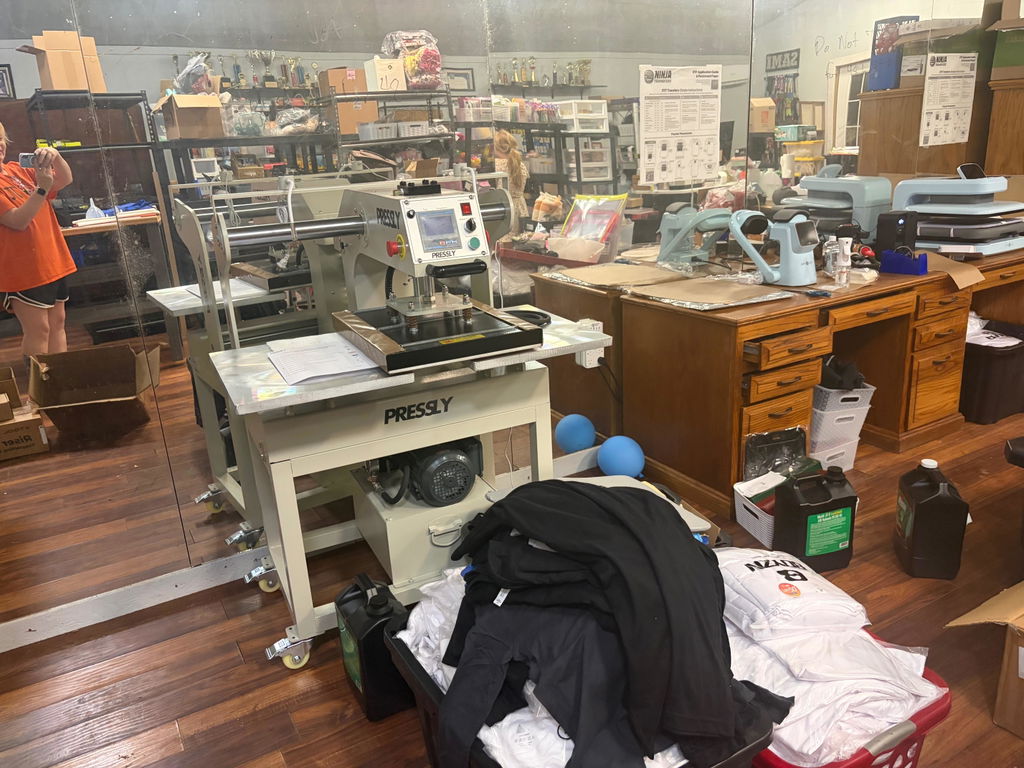
A heat press used every day should not be maintained only after something stops working. At the same time, operators should not turn routine housekeeping into unauthorized mechanical or electrical service.
A useful maintenance program separates three different responsibilities: normal operator checks, scheduled manufacturer-defined maintenance, and work that belongs to qualified service personnel.
This structure helps a production shop keep small observations visible without encouraging staff to open, modify, or repair equipment they are not authorized to service.
What Maintenance Does a Heat Press Need?
Follow the exact machine manufacturer's maintenance instructions. During normal production, operators can monitor accessible working surfaces, controls, visible damage, unusual behavior, and documented fluid or consumable checks where permitted.
Scheduled component service, electrical work, hydraulic repairs, guard removal, and other technical procedures should follow the equipment documentation and be performed by appropriately qualified personnel.
Use Three Maintenance Levels
Operator Checks
Visible condition, cleanliness, normal control operation, and other checks specifically permitted during routine use.
Scheduled Maintenance
Manufacturer-defined service activities performed at the specified interval or condition.
Qualified Service
Electrical, hydraulic, structural, or guarded-machine work that requires appropriate technical competence and energy-control procedures.
The boundaries depend on the machine. A task considered normal on one model may require service intervention on another.
Start With a Pre-Production Visual Check
Before beginning the day's production, look at the equipment in its normal installed condition.
Check for obvious physical changes: damaged cables, loose external components, contaminated pressing surfaces, abnormal leaks, missing covers, obstructed controls, or anything that differs from the approved setup.
This is not a disassembly inspection.
The purpose is to notice changes early and decide whether production can begin under the manufacturer's instructions.
If a condition appears unsafe or inconsistent with normal machine operation, stop and escalate rather than improvising a repair.
Keep the Pressing Area Clean
Adhesive residue, transfer material, lint, and other contamination can accumulate around production equipment.
Use only cleaning methods and materials permitted by the machine manufacturer. Do not scrape, chemically treat, or aggressively clean a platen based on a generic online recommendation when the exact surface coating and equipment instructions are unknown.
The same rule applies to protective sheets and lower pads. Replace or maintain them according to their documented purpose rather than waiting until the condition visibly affects every job.
A clean working area also makes new leaks, damage, or residue easier to identify.
Record Changes Instead of Guessing
Maintenance becomes easier when operators document unusual conditions while they are still small.
A simple log can include the date, machine identity, observed condition, job running at the time, whether production stopped, and who reviewed the issue.
A note such as “machine sounds different” is more useful when paired with the event that produced the observation. Did the sound occur while the head moved, when pressure engaged, or while the machine sat idle?
Do not ask operators to diagnose internal failures. Ask them to describe what they observed accurately.
Follow Model-Specific Hydraulic Maintenance
Hydraulic presses introduce maintenance requirements that do not apply to every manual or electromagnetic press.
For example, DTF Bank's HYDRO1620 product documentation instructs users to monitor the hydraulic oil level through the sight gauge and specifies AW-46 hydraulic oil. The same documentation calls for an annual oil change for that model.
Those instructions belong to the HYDRO1620. They should not be copied automatically to unrelated machines.
When a shop operates multiple models, keep a maintenance reference for each machine so operators do not apply one press's service schedule to another.
Do Not Turn Inspection Into Repair
Seeing a problem does not authorize an operator to open the machine or bypass protective systems.
OSHA's general machine-guarding requirements address operator protection from hazards associated with points of operation and moving machine parts.
Where servicing or maintenance could expose employees to unexpected energization, startup, or stored energy, OSHA's hazardous-energy standard establishes requirements for controlling that energy.
For a production manager, the practical lesson is simple: define which activities are routine operator work and which require an authorized service procedure.
Watch for Stop-and-Escalate Conditions
A maintenance plan should identify conditions that end normal production until they are reviewed.
Examples may include visible electrical damage, damaged guards, unexplained fluid leaks, abnormal mechanical movement, control behavior that differs from the manual, or an unexpected failure to stop or release correctly.
This is not a universal defect list. Use the actual machine documentation and workplace safety requirements to define the conditions relevant to your equipment.
Do not keep producing simply because the machine can still complete a cycle.
Inspect the Workspace Too
The machine can be mechanically sound while the surrounding workstation creates maintenance or safety problems.
Check that cables remain clear of hot and moving components, ventilation openings are not blocked, service access has not been filled with storage, and garment staging has not migrated into the machine's movement envelope.
Production spaces change over time. New racks, boxes, carts, and worktables can slowly reduce the clearances that existed when the press was installed.
A periodic workspace review helps preserve the intended operating environment.
Keep Parts Identification With the Machine
When a component needs replacement, identify the exact model and part rather than ordering something that looks similar.
DTF Bank maintains a HYDRO1620 heat press parts collection for model-specific replacement components.
The existence of a parts catalog does not mean every component should be installed by an operator. Some replacements may require qualified service.
Keep model, serial, revision, and service information available so the correct component and procedure can be confirmed before work begins.
Use Maintenance History in Production Planning
Maintenance records are not only for technicians. They can help production managers identify patterns.
If the same issue repeatedly interrupts the same machine, review the history before treating each incident as unrelated.
If a consumable or scheduled service item repeatedly approaches its maintenance point during peak periods, the shop can plan service before the production calendar becomes difficult.
This is different from predicting a failure date. The purpose is to use known service requirements and actual machine history to improve scheduling.
Avoid Generic Maintenance Schedules
It is tempting to create one daily, weekly, and monthly checklist for every press in the shop.
That can be useful for housekeeping tasks, but equipment-specific service intervals should remain tied to the manufacturer documentation.
A manual clamshell, electromagnetic slide-out press, and hydraulic moving-head machine do not necessarily share lubrication, inspection, or fluid requirements.
Build the schedule from each machine outward rather than from a generic template inward.
Maintenance Supports Production Capacity
High production equipment is valuable only when it is available to produce.
Preventive maintenance does not guarantee zero downtime, but it helps a shop separate known service requirements from avoidable neglect.
It also improves troubleshooting conversations. A technician receiving the machine model, maintenance history, exact observed behavior, and recent changes has better information than one receiving only “the press stopped working.”
That makes maintenance documentation part of the production system rather than an administrative task.
Maintain the Press You Actually Own
Build the maintenance plan around the machine's real documentation. Give operators clear routine checks, schedule manufacturer-required service, and create an escalation path for work that belongs to qualified personnel.
For shops evaluating equipment intended for repeated daily use, review DTF Bank's high production heat press guide together with each model's maintenance and support requirements.
Frequently Asked Questions
How often should a heat press be maintained?
Follow the exact manufacturer's schedule. Different machine designs can have different maintenance requirements, so a universal interval should not replace model-specific instructions.
Can operators repair a heat press?
Only activities authorized by the employer and equipment instructions should be performed. Technical electrical, hydraulic, or guarded-machine service may require qualified personnel and appropriate energy-control procedures.
Should I clean the platen every day?
Inspect the working surface regularly and use the cleaning method permitted by the manufacturer. Frequency depends on use, contamination, and the specific equipment instructions.
What should a maintenance log include?
Record the machine identity, date, observation or service activity, who performed or reviewed it, and any production impact.
Does preventive maintenance prevent every breakdown?
No. It cannot eliminate every failure, but it can reduce avoidable problems and make service history easier to interpret.